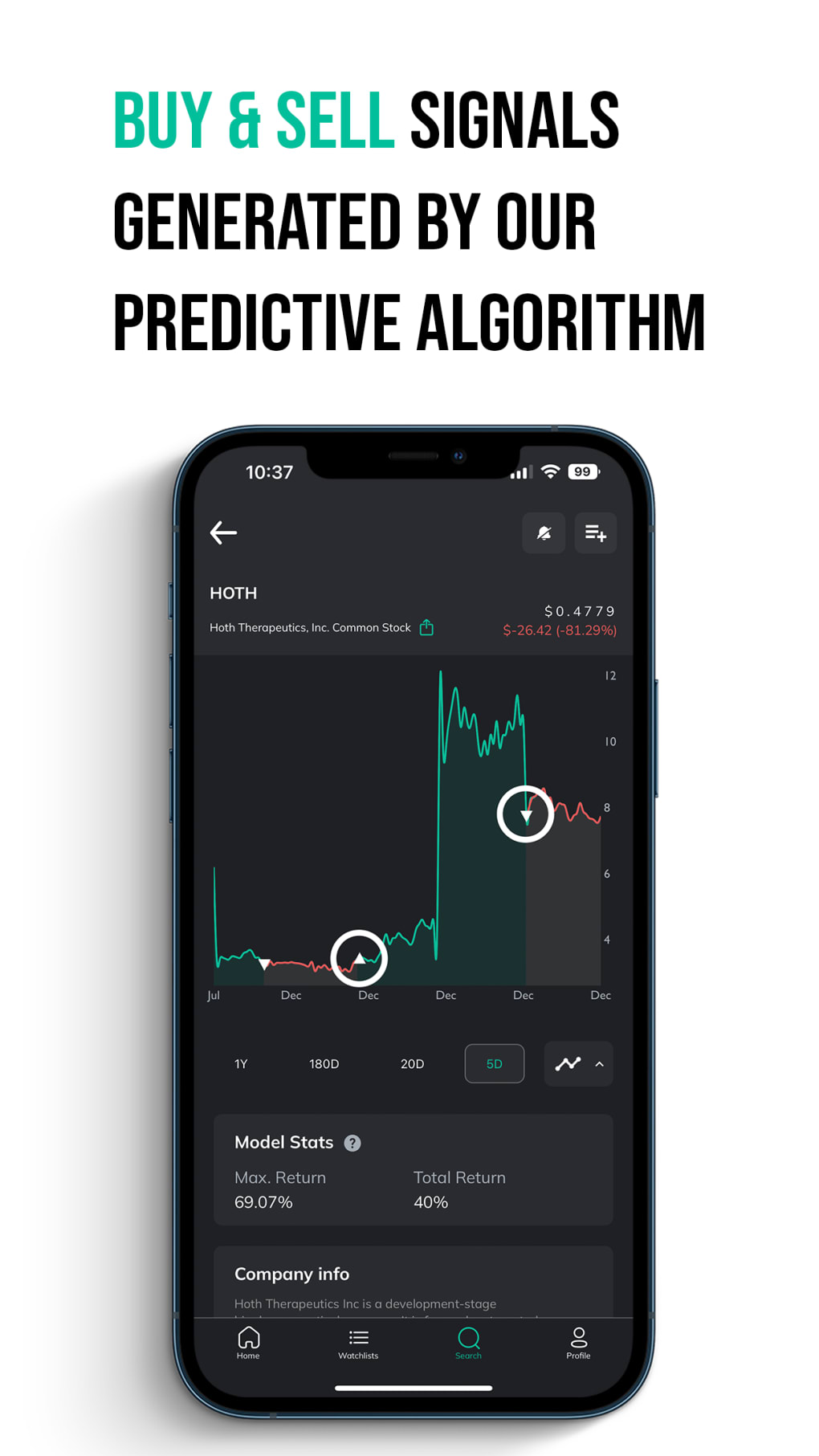
The AI and machine (ML) model used by the stock trading platforms and prediction platforms need to be evaluated to ensure that the data they provide are accurate trustworthy, useful, and practical. Models that are not properly designed or overhyped could result in financial losses as well as flawed forecasts. Here are the top 10 tips for evaluating AI/ML models that are available on these platforms.
1. Learn about the goal and methodology of this model
The objective clarified: Identify the objective of the model, whether it is for trading at short notice, investing in the long term, analyzing sentiment, or a way to manage risk.
Algorithm transparency - Check to determine if there are any public disclosures regarding the algorithm (e.g. decision trees neural nets, neural nets, reinforcement learning, etc.).
Customizability: Determine if the model can adapt to your particular strategy of trading or tolerance for risk.
2. Review Model Performance Metrics
Accuracy: Examine the accuracy of predictions made by the model, but don't rely solely on this measure, since it may be inaccurate when it comes to financial markets.
Recall and precision: Determine how well the model identifies true positives (e.g. accurately predicted price movements) and minimizes false positives.
Risk-adjusted returns: Assess if the model's predictions yield profitable trades following accounting for the risk (e.g., Sharpe ratio, Sortino ratio).
3. Test the Model by Backtesting it
Performance history The model is tested by using data from the past to determine its performance under prior market conditions.
Tests using data that was not previously being used to train To prevent overfitting, try testing the model using data that was never previously used.
Scenario Analysis: Check the model's performance in different market conditions.
4. Check for Overfitting
Signs of overfitting: Search for models that perform exceptionally well on training data but struggle with data that isn't seen.
Regularization techniques: Verify the application uses methods like regularization of L1/L2 or dropout to avoid overfitting.
Cross-validation. The platform must perform cross validation to test the model's generalizability.
5. Examine Feature Engineering
Relevant Features: Look to determine whether the model is based on meaningful characteristics. (e.g. volume, price, technical indicators as well as sentiment data).
Features selected: Select only those features that are statistically significant. Beware of irrelevant or redundant data.
Updates to dynamic features: Check whether the model is able to adapt to new characteristics or market conditions in the course of time.
6. Evaluate Model Explainability
Interpretation: Ensure that the model is clear in its reasons for its predictions (e.g. SHAP value, importance of particular features).
Black-box Models: Be wary when you see platforms that use complicated models that do not have explanation tools (e.g. Deep Neural Networks).
User-friendly insights : Find out if the platform offers actionable data in a format that traders can use and understand.
7. Examine the Model Adaptability
Market changes: Verify if the model can adapt to market conditions that change (e.g. changes in regulations, economic shifts or black swan-related occasions).
Check for continuous learning. The platform must update the model regularly with fresh information.
Feedback loops: Ensure that the platform incorporates feedback from users or actual results to refine the model.
8. Check for Bias and Fairness
Data biases: Ensure that the data used in training are accurate and free of biases.
Model bias: Find out if you are able to actively detect and reduce biases that are present in the forecasts of the model.
Fairness - Make sure that the model you choose to use isn't biased in favor of or against specific sectors or stocks.
9. Evaluation of the computational efficiency of computation
Speed: Determine whether your model is able to make predictions in real-time or with minimal delay, particularly for high-frequency trading.
Scalability: Check whether the platform can manage massive datasets and many users without affecting performance.
Utilization of resources: Determine if the model is optimized to use computational resources effectively (e.g., GPU/TPU utilization).
Review Transparency, Accountability, and Other Questions
Model documentation: Make sure the platform has comprehensive documentation about the model's structure and the process of training.
Third-party auditors: Check to determine if the model has undergone an independent audit or validation by an outside party.
Error Handling: Verify whether the platform contains mechanisms that identify and correct mistakes in models or failures.
Bonus Tips:
User reviews and case studies: Study user feedback to get a better understanding of the performance of the model in real-world situations.
Trial period: Try the demo or trial version for free to check the model's predictions and usability.
Customer support - Make sure that the platform has the capacity to provide robust support to solve problems related to model or technical issues.
With these suggestions by following these tips, you will be able to evaluate the AI and ML models of stock prediction platforms, ensuring they are trustworthy, transparent, and aligned with your trading goals. Have a look at the most popular stock analysis for blog recommendations including chart stocks, ai stock market prediction, ai share price, ai companies stock, stock market ai, trade ai, ai companies stock, stock picker, learn stock trading, ai share price and more.

Top 10 Tips For Evaluating The Speed And Latency Of Ai Stock Predicting/Analyzing Trading Platforms
Speed and latency are important elements when it comes to evaluating AI stock predicting/analyzing trading platforms, particularly for active traders, algorithmic traders and high-frequency traders. Milliseconds of delay could affect the execution of trades and profit. These are the top 10 suggestions to evaluate the latency and speed of these platforms.
1. Real-time data feeds that are to be evaluated
Data delivery: Check that the platform is able to deliver data in real-time with a minimum delay (e.g. less than a millisecond).
Data source proximity - Check to determine if the servers on your platform are close to major exchanges. This can reduce the time for data transmission.
Data compression: Determine if the platform uses efficient data compression in order to speed up data delivery.
2. Test the speed of trade execution
Processing orders: The platform's ability to complete and process trades quickly once an order has been submitted.
Direct market access (DMA). Check to see if that the platform you're using supports DMA. DMA allows orders that are sent directly to exchanges to be processed without intermediaries.
Execution reports: Check if the platform provides detailed execution reports, including timestamps for orders, confirmation, and fill.
3. Examine the Platform's Responsiveness
User interface (UI) speed: Test how fast the UI on your platform responds to your inputs (e.g. pressing buttons or loading charts).
Chart updates Check if charts and visuals have a real-time update without lag.
Performance of mobile apps. When using mobile apps, you should ensure it's running as fast and smoothly as the desktop app.
4. Look for infrastructure with low latency.
Server locations: Make sure the platform uses low-latency servers in close proximity to major financial hubs or exchanges.
Co-location Services: Verify whether the platform permits co-location. This will permit you to save your trading algorithm on servers that are close to the Exchange.
High-speed network: Verify whether the platform uses high-speed fibre optic networks, or any other low latency technology.
5. Backtesting and testing the speed of simulations.
Test the platform's capacity to process and analyze historical data.
Platform latency must be minimal enough to allow live simulations of trades in real time.
Parallel processing: Ensure that the platform is using parallel processing, also known as distributed computing, to speed the process of complex calculations.
6. Assess API Latency
API response time: Determine how quickly the platform's API responds to requests (e.g., fetching market data, placing orders).
Rate limits. Examine whether there are acceptable limits on the API. This will help prevent delays in high-frequency transactions.
WebSocket Check if the platform is compatible with WebSocket protocols, which allow for streaming data in real time with minimal latency.
7. Test Platform Stability During Loading
The scenarios of trading with high volumes: Check the stability of the platform and its ability to respond by simulated trading scenarios.
Market volatility: Ensure that your platform is able to handle price fluctuations during times that are high-risk.
Stress testing: Find out if the platform allows you to test your plan under extreme circumstances.
8. Study the network and its connectivity
Internet speed requirement: To achieve optimal performance, make sure that your internet speed meets the recommended platform's speed.
Make sure there aren't any redundant connections.
VPN latency. If using VPN, VPN look to see whether it creates an excessive amount of latency.
9. Look for Speed Optimization Features
Pre-trade Analyses: Make sure that the platform includes pre-trade analyis to optimize order processing and execution speed.
Smart order routing (SOR), also known as smart order routing, is a method for determining the most speedy and efficient execution locations.
Monitoring latency: Find out whether the platform has tools to monitor and analyze latency in real-time.
Review the feedback of users and benchmarks
User reviews: Look for user feedback on the platform to get an idea of the speed and latency of the platform.
Third-party Benchmarks: Search for independent benchmarks that compare the speed of a platform to its peers.
Case studies and testimonials Check whether there are case studies that demonstrate the effectiveness of the platform's low-latency capabilities.
Bonus Tips
Trial period: You can avail a demo for free or a trial period to evaluate the platform's performance and latency.
Customer Support: Verify that the platform can offer assistance for problems related to latency or optimize.
Hardware requirements: Determine if the platform requires specific hardware to ensure optimal performance.
If you follow these guidelines, you can effectively assess the speed and latency of AI stock-predicting and analyzing trading platforms, ensuring you choose the best platform for your trading needs and minimizes delays. Platforms that are low-latency are vital for high-frequency algorithmic traders. Small delays can negatively impact their profits. View the most popular my response on stocks ai for more advice including ai software stocks, chart analysis ai, stocks ai, chart ai trading, ai software stocks, free ai stock picker, trading ai tool, best ai copyright, ai for trading stocks, stocks ai and more.